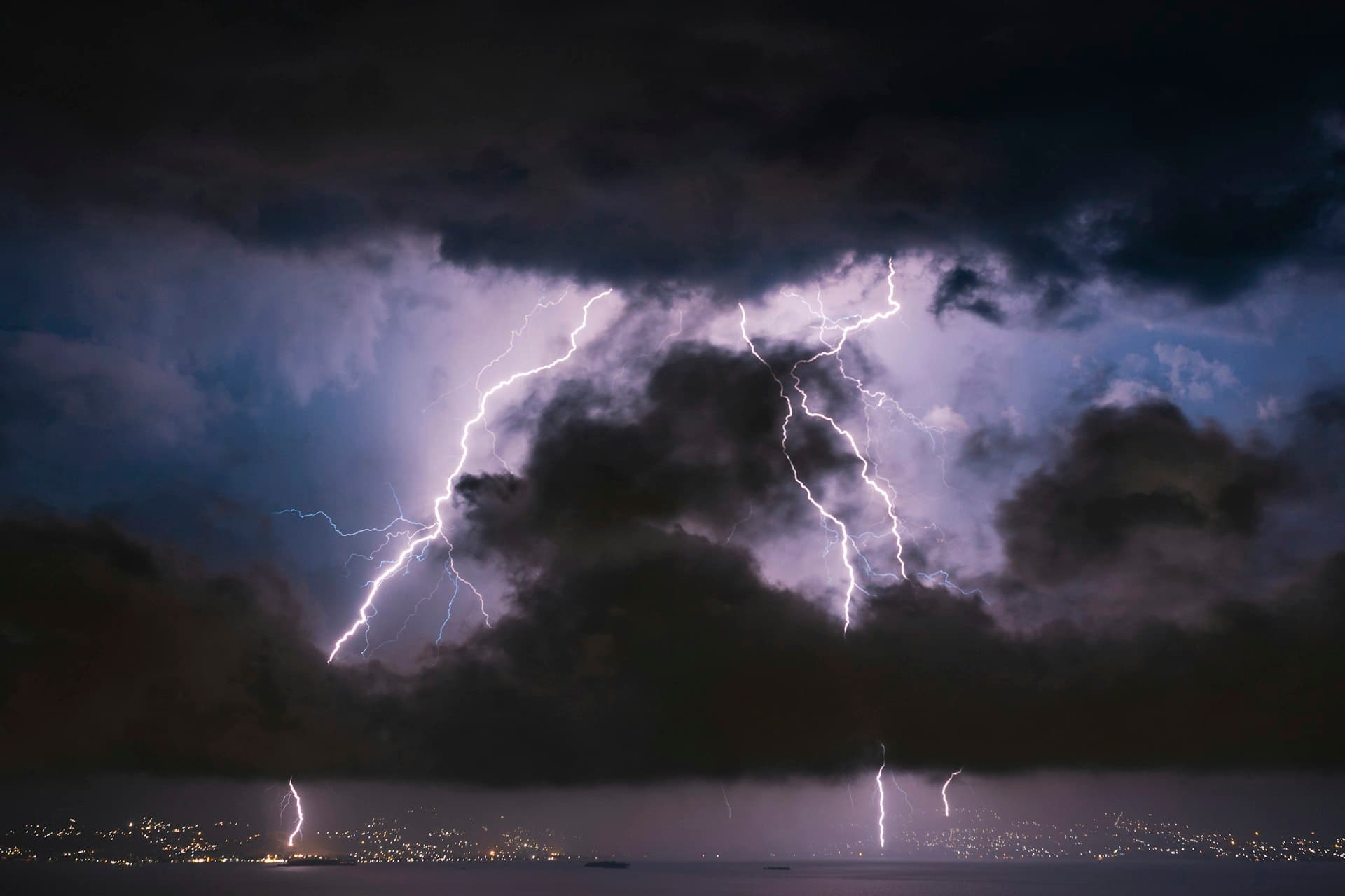
Surge
Voltage rises above normal for a moment, often when large loads switch off or the utility switches lines.
Stresses power supplies and shortens the life of electronics and LED drivers.
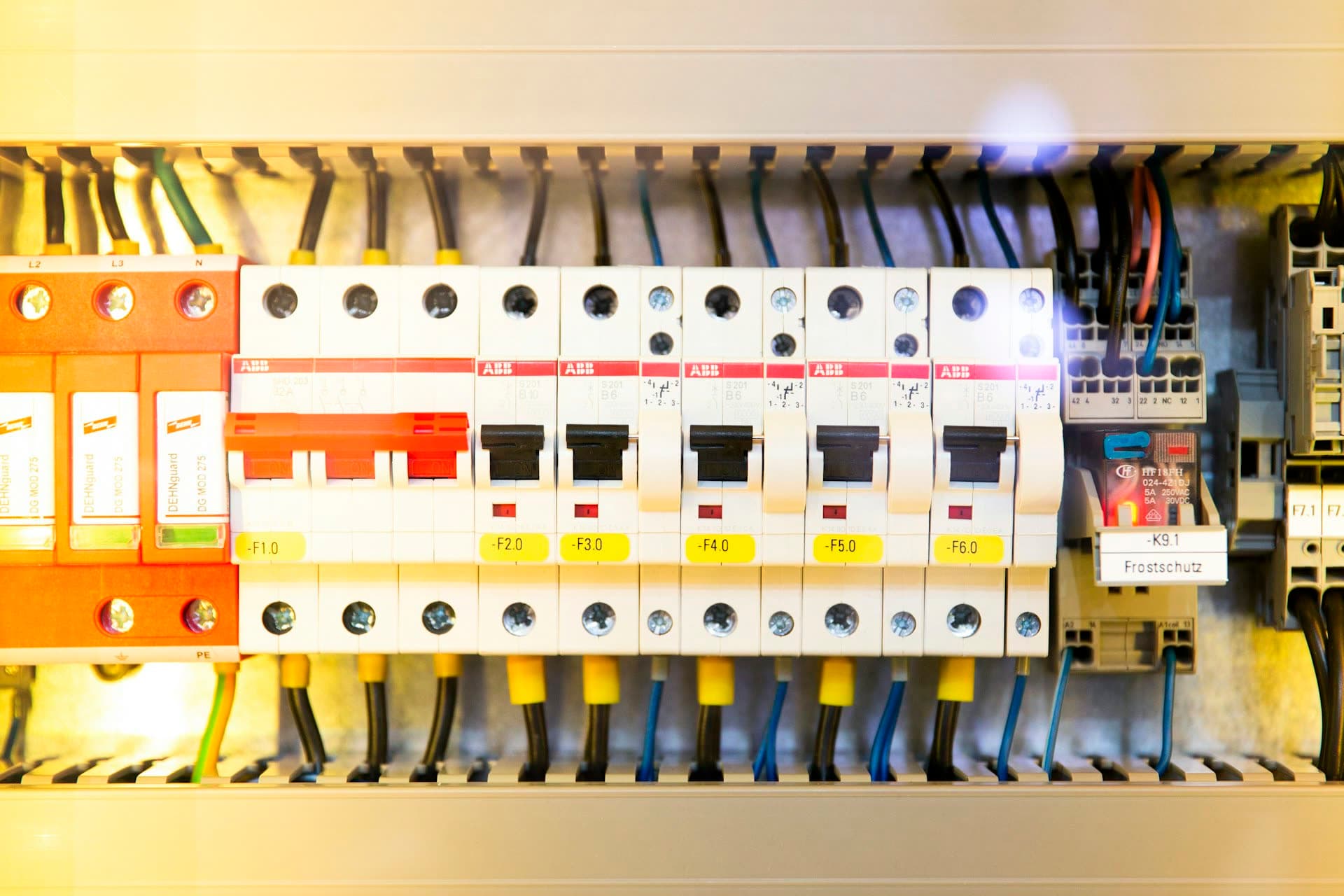
Why your house sees power problems every day, what they do to your equipment, and how a HUB stops them before they reach the panel.
Utility grid
Your normal supply from Eversource, National Grid or your local utility.
Solar (optional)
Up to 10 kW through RoseWater's SBX10 solar box.
Generator (optional)
One or more generators can feed the HUB during a long outage.
RoseWater HUB
Every source comes in through industrial surge and lightning protection. Double-conversion inverters rebuild a clean 120 V, 60 Hz sine wave. The battery sits on the same path, ready to fill any sag or outage instantly.
Your electrical panel
The circuits the HUB serves, tied in by a licensed electrician.
Your home
Lighting, network, AV, controls, kitchen, HVAC controls and whatever else your plan covers.
Voltage rises above normal for a moment, often when large loads switch off or the utility switches lines.
Stresses power supplies and shortens the life of electronics and LED drivers.
A very fast, very high voltage burst, from lightning nearby or switching on the grid.
Can destroy equipment in one hit. Smaller spikes do damage a little at a time.
Voltage drops below normal, for a fraction of a second or for minutes.
Lights dim, displays flicker and equipment reboots. You cannot divert power that is missing, so only stored energy fixes a sag.
Interference riding on the sine wave from motors, dimmers, chargers and other loads in the house.
Shows up as hum, buzz and odd behavior in audio, video and control systems.
The grid stops supplying power, for one second or for days.
Everything without backup shuts off. Many outages are short enough that a generator never starts.
A rebuilt 120 V, 60 Hz sine wave with under 3% distortion, whether the source is the grid, the battery, solar or a generator.
The grid fails at 0 seconds. A dark bar means the house has no power.
There is zero transfer time, because the house is already running on the HUB, so nothing changes when the grid drops.
Switches over automatically when it senses the outage. Usually quick, but it is a switchover, and the time varies by model.
The engine has to start and reach speed before the transfer switch moves. Dealers typically quote about 10 to 30 seconds.
See how a HUB would cover your home. The Power Plan takes a few minutes and gives us what we need to size it.
Zero transfer time means the house never switches from one power source to another when the grid fails. A RoseWater HUB is already supplying the circuits it serves, so an outage causes no gap at all and nothing blinks or reboots.
Online double conversion means incoming power is converted to DC and then rebuilt as a fresh AC sine wave before it reaches your panel. Because the output is rebuilt all the time, problems on the incoming line do not pass through. RoseWater HUBs run this way continuously and have no eco mode that bypasses it.
A surge is extra voltage and a sag is missing voltage. A surge protector can divert extra energy to ground, but nothing can divert power that is not there, so only stored energy such as a battery can fill a sag.
No. A whole house surge protector diverts voltage spikes, which is useful, but it does nothing for sags, brownouts, electrical noise or outages. A RoseWater HUB includes surge and lightning protection and handles those other problems too.
You may already be seeing the symptoms without connecting them to power. Lights that flicker or dim, displays that wake up on their own, equipment that needs a reboot and LED bulbs that fail early are common signs of poor power quality. Outages are only the part you notice.
Yes. A HUB conditions power from every source it is connected to, so generator power gets the same surge protection, regulation and filtering as grid power before it reaches your panel.
Choose what should stay on and get a first sizing for your home.
A side-by-side comparison of the main backup options.
HUB20, HUB40 and 3-phase systems, with full specs.
What dirty power is, why lights flicker and equipment reboots, and how conditioning at the panel fixes it.
What a panel surge protector stops, what it misses, and where power conditioning picks up.
Transfer time, online double conversion, and how a whole-home UPS differs from a home battery.
Straight answers on batteries, generators, solar and installation.
Call (781) 333-8003 or send a note and we will set up a consultation.
Build a Power Plan for your home in a few minutes. We review it, confirm sizing on a site visit, and design a RoseWater system around the way you live.