Why does the Outer Cape lose power so often?
The Outer Cape loses power often because much of it hangs off a single long line. When that circuit is damaged anywhere along roughly 13 miles, a long string of towns can feel it.
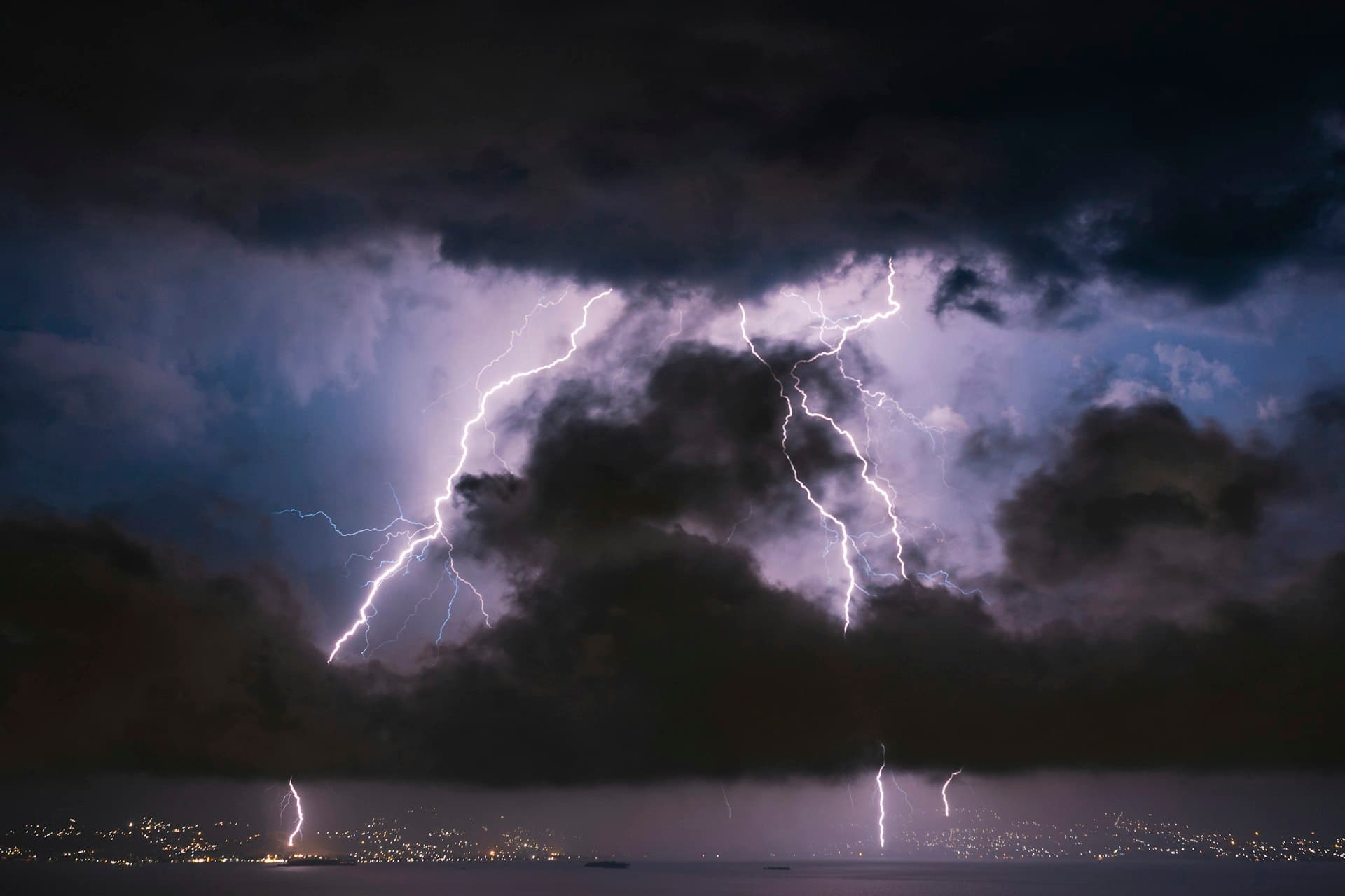
The rest of the Cape and the Islands share some of the same exposure. Homes sit at the end of long overhead runs through pine and oak, close to open water where wind is strongest. Nor’easters, summer thunderstorms and the remains of tropical storms all hit the coast first. Salt spray adds its own wear on overhead equipment.
| Risk on the Cape and Islands | Why it matters | How a HUB helps |
|---|---|---|
| Long single feeds | One fault can affect many towns | Protected circuits keep running with zero transfer time |
| Storm exposure | Blinks, surges and longer outages | Conditioning and surge protection rated for 40 strikes of 140,000 V |
| Empty second homes | Nobody there to reset or check anything | Remote monitoring with alerts to you, us and RoseWater |
| Refrigeration and wine | Spoilage and damage when power is out | Stays powered on the HUB, sized in your Power Plan |
| Long restorations | Days without power after big storms | Pairs with a generator for long outages |
What is the Provincetown battery and does it protect my house?
The Provincetown battery is a large utility battery that Eversource installed to support the Outer Cape’s single long feed. It helps the local grid during some outages on that line. It is not backup for your house.
A utility battery works at the level of the grid. It can’t help if a tree takes down the line on your street or tears the service wire off your house. It also does nothing about the daily sags, surges and noise that reach your equipment. Those problems are solved inside the house, at your own electrical panel.
Can I monitor my home’s power when I am not there?
You can monitor your home’s power from anywhere with a RoseWater HUB. Monitoring is built in, and for a second home it may be the most useful feature of all.
We give you access to the HUB’s analytics, which record outages, voltage changes and energy data. Alerts can go to you, to us and to RoseWater at the same time, so a problem gets seen even when the house is closed for the season. RoseWater engineers and the local dealer can watch the system continuously through an online portal. Because the HUB is always online, the network on it stays up through an outage. As long as your internet provider is still running, your cameras, thermostats and leak sensors keep reporting.
RoseWater points out that time has become a luxury for people with more than one home. A power glitch at a house two hours away can cost a weekend. A system that rides through the glitch and tells you about it gives that weekend back.
Do towns on the Cape allow indoor battery systems?
Whether a town allows an indoor battery system depends on the town, so ask the building department early in the design. Rules for home batteries are still developing across Massachusetts.
Some towns treat any large battery as a lithium energy storage system. RoseWater HUBs use advanced lead-acid (carbon) batteries, which RoseWater says can mean less regulatory friction. Where a town does not allow batteries indoors, the HUB40 has an outdoor enclosure that holds the full three-shelf battery configuration, stands about 60 inches tall and connects to the breaker box the same way an indoor system does. Our battery chemistry guide explains why chemistry matters for permitting.
Can a backup system go outdoors in salt air?
A RoseWater HUB40 can go outdoors in its own enclosure, which is rugged, powder-coated and weather-resistant, with built-in air conditioning or heating and cooling. RoseWater launched it in July 2025 for retrofits and for towns that do not allow indoor battery systems.
RoseWater does not publish a specific salt-air rating, so on a waterfront property we start by looking for an indoor location. A garage or basement works well. The system needs no air conditioning indoors and needs a space about 3.5 feet wide, 3 feet deep and 8 feet high, plus 36 inches clear in front for service. When indoor space is not workable, we plan the outdoor location with you and your electrician, away from direct spray where we can.
What RoseWater does differently
A RoseWater HUB is always online with double conversion, so the house runs on clean, rebuilt power all the time and never sees a gap when the grid fails. For a coastal home that means the wine room stays cold, the network and cameras stay up, and the lighting and shades don’t need resetting after every storm. Surge and lightning protection is non-sacrificial and rated for up to 40 strikes of 140,000 V.
A HUB20 handles 20 kW on a 100 A service. A HUB40 handles 40 kW on 200 A. For the longest outages, a HUB works with one or more generators and conditions their output too.
How we work on the Cape and Islands
We design and specify the system, register the project with RoseWater’s engineering team, and coordinate your licensed electrician and RoseWater’s technicians, who handle delivery and commissioning. After that we integrate the HUB with your home’s control and monitoring systems and support it afterward. Island projects take more planning for freight and scheduling, and we build that into the timeline from the start.
Start with our Power Plan tool, see where we work on our Cape Cod and Martha's Vineyard and Nantucket pages, or get in touch.