Can a home battery work with a standby generator?
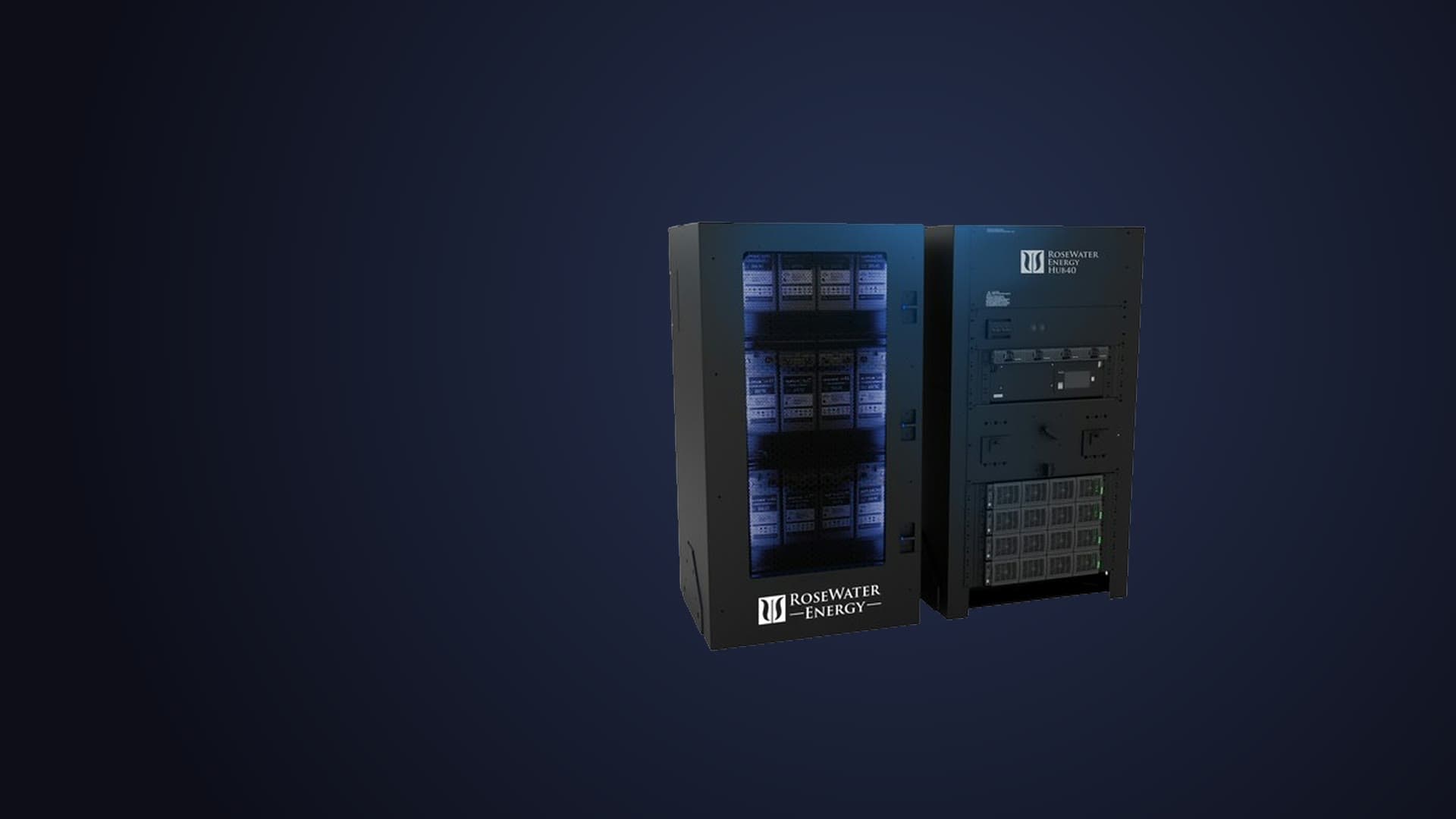
A home battery can work with a standby generator, and RoseWater HUBs are designed for it. A HUB integrates with one or more generators.
The two cover each other’s weak spots. A generator can run for days on fuel, but it leaves a gap while it starts and does nothing about power quality. A battery system covers the gap and cleans the power, but its run time is limited by its storage. Put together, the house gets instant backup, clean power from either source, and run time that lasts as long as the fuel does.
| Generator alone | RoseWater HUB alone | HUB with a generator | |
|---|---|---|---|
| Gap when the grid fails | Seconds of darkness | None | None |
| Daily sags, surges and noise | Not addressed | Conditioned | Conditioned |
| Quality of backup power | Raw generator output | Clean, rebuilt power | Clean, rebuilt power from either source |
| Run time | As long as fuel lasts | Sized to your loads | As long as fuel lasts |
| Power Plan tier | Not a tier on its own | Essential, typically HUB20 | Enhanced, typically HUB40 |
Is generator power clean enough for electronics?
Generator power is not always clean enough for sensitive electronics. Output can wander in voltage and frequency, especially when a large load such as a compressor or well pump starts or stops.
Lights may pulse. Some equipment may complain or shut down. Over a long outage, that rough power adds to the wear on everything it feeds. A RoseWater HUB solves this the same way it handles grid power. It is always online with double conversion, so whatever comes in, from the grid or the generator, is rebuilt as a clean 120 V, 60 Hz sine wave with total harmonic distortion under 3%. RoseWater notes that the conditioning applies whichever source is feeding the HUB.
What happens in the seconds before a generator starts?
In the seconds before a generator starts, a house without a battery system goes dark. Every interruption-sensitive system in the house notices.
- The grid fails and the house loses power.
- The generator’s controls sense the outage and start the engine.
- The engine comes up to a stable speed and voltage.
- The automatic transfer switch moves the house onto the generator.
- When the grid returns, the switch moves the house back, which is one more interruption.
During that sequence, networks drop, lighting control resets, theater processors reboot and appliance boards restart. With a HUB in front, none of that reaches the protected circuits. The batteries are already carrying the load, so the transfer happens behind the HUB while the house keeps running on its output.
Does a battery reduce how often the generator runs?
A battery can reduce how often the generator runs, depending on how the two are wired and set up. The key change is that the house no longer depends on the generator starting quickly.
Without a battery, a generator is usually set to start as soon as it senses an outage, because every second of delay is a second of darkness. With a HUB carrying the protected loads, some designs allow a delayed start, so a short outage is covered by the battery alone and the generator stays quiet. When the outage runs long, the generator starts and carries the house, and the batteries recharge. Your electrician or generator installer configures the generator and transfer switch, and we coordinate those settings with the HUB design.
Who installs and coordinates both systems?
We coordinate both systems, and licensed trades do the electrical and generator work. That split keeps one person responsible for the design without anyone working outside their license.
- Boston Backup Power designs and specifies the RoseWater system, registers the project with RoseWater’s engineering team, coordinates every trade, integrates the HUB with the home’s control and monitoring systems, and supports it afterward.
- Your licensed electrician makes the HUB’s tie-in at the main panel and wires the generator and transfer switch, or works alongside your generator installer.
- RoseWater’s technicians handle delivery and commissioning of the HUB. Commissioning by RoseWater-trained personnel is required for the three-year warranty.
If you already have a generator, we design around it. If you are adding one, we work with your electrician to size and place it with the HUB in mind.
What RoseWater does differently
Most battery systems switch over when the grid fails and leave generator power exactly as rough as it arrives. A RoseWater HUB has no transfer switch of its own and no eco mode. It stays online with double conversion around the clock, so it fills the gap before the generator starts and cleans up the generator’s output once it runs. Surge and lightning protection covers the main supply, solar input and standby power, rated for up to 40 strikes of 140,000 V.
The HUB40 is the system RoseWater typically recommends alongside a generator, at 40 kW on a 200 A service. The HUB20 suits a 100 A service or a subpanel of critical loads, and 3-Phase systems serve 208 V three-phase homes.
Getting started
Tell us what has to keep running and how long your outages tend to last. Our Power Plan tool shows whether your home fits the Essential, Enhanced or Whole Home tier, and our comparison page lays out the choices. To plan around a generator you already own, get in touch.