Savant Power
Panel space, a module panel, conduit, network and a wall for the battery. Plan these before the walls close and Savant Power goes in cleanly.
What needs planning?
1. Panel space
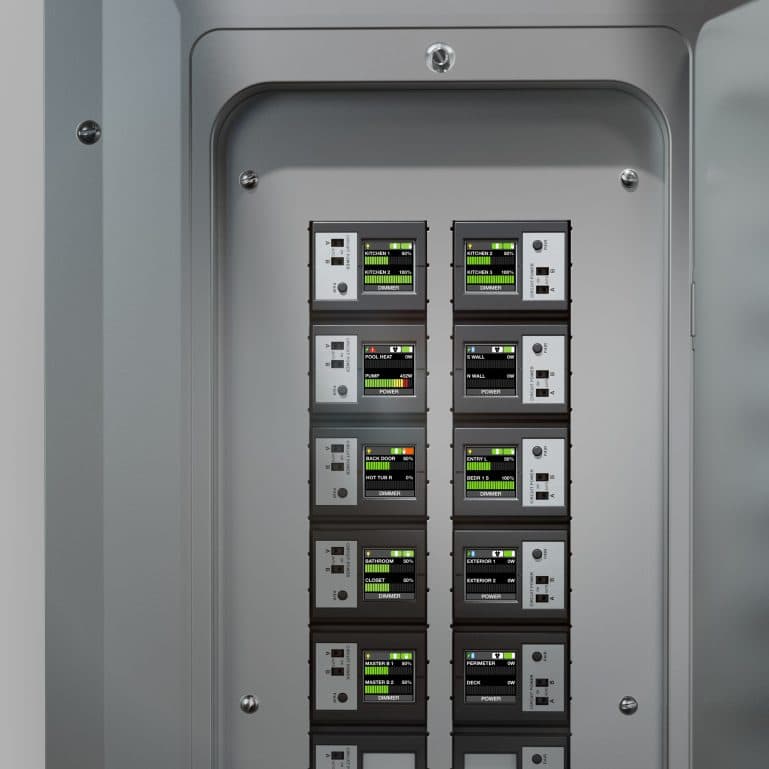
Leave room beside the breakers
2. A module panel
When does a house need a second panel?
Savant shows two layouts: modules mixed in with the breakers in one panel, or a main panel plus a separate Power Module panel beside it. A separate module panel needs a neutral sized for the circuits it carries, and if it also holds breakers, a load calculation and a correctly sized feeder.
3. Conduit and network
Run conduit between the main panel and any module panel, sized by the electrician for the circuits that pass through it. Keep AC and DC conductors in separate conduit. Leave a spare run for later.
The modules talk to the Power Director over Bluetooth, so no control wire runs to them. The Director mounts within 6.5 ft of the modules and takes a PoE Ethernet cable. Savant strongly recommends a hardwired network, so we ask for Ethernet to the Director, to each inverter and to the EV charger location, home-run to the network rack.
| Dual Relay module (two 120 V circuits) | 2 spaces |
|---|---|
| 2-Pole 30 A module | 2 spaces |
| 2-Pole 60 A module | 4 spaces (3 in 1-inch panels) |
| Power Director | Within 6.5 ft of the modules, with PoE Ethernet |
| Panel brands | Square D QO, Eaton CH, or a 1-inch panel (Homeline, BR, Siemens, GE) |
4. Where do the battery and inverter go?
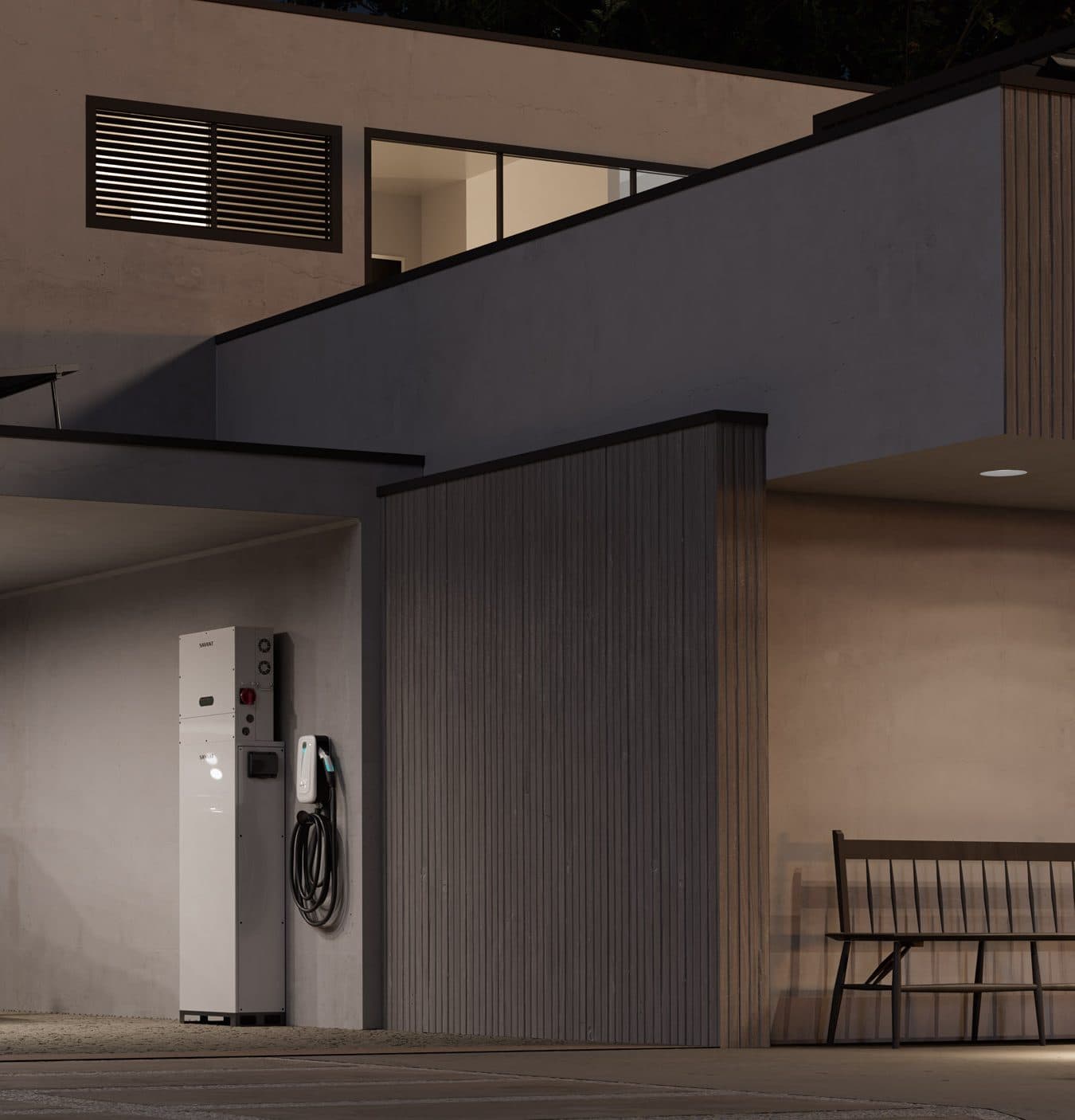
Savant Power Storage 20 is an inverter that stacks on a 20 kWh battery cabinet. Many homes use one or two stacks. Each stack needs a flat floor that can carry its weight, a wall to anchor it, and clear space around it. Power Storage 50 is larger and indoor only.
A garage or a dry mechanical room close to the main panel is the usual choice, because short runs to the panel cost less. Each stack stands on the floor, and in a garage it has to sit out of the driving path. Keep it away from overhead water and out of direct sun. Ask us before the framing goes up and we will mark the wall.
Larger systems add more stacks and need an engineered layout. See Savant Power Storage.
| One stack (inverter on battery) | 85.4 in high, 25.6 in wide, about 13 in deep |
|---|---|
| Weight of one stack | About 600 lb, standing on the floor |
| In front | 36 in clear |
| Sides | About 12 in, and at least 11.8 in on the side opposite the battery entry |
| Between stacks | Up to 3 ft, depending on the code your town uses |
| Wall length for two stacks | About 9 ft |
| Operating temperature | 32 to 113 °F, best at 50 to 95 °F |
5. Loads that need a closer look
When should we talk?
Send us the plans or tell us about the project. We call to go through panel space, the battery wall and the network runs.
Keep reading
Rough-In Questions
Do Savant Power Modules need a special panel?
Do Savant Power Modules need a special panel?
No. Savant makes modules for Square D QO and Eaton CH panels, and a 1-inch pigtail version for Homeline, Eaton BR, Siemens and GE panels. Tell us the panel brand early so we order the right ones.
How much panel space should we leave?
How much panel space should we leave?
Modules take their own breaker spaces: 2 for a Dual Relay or 30 A module and 4 for a 60 A module (3 in 1-inch panels). Savant's rule is breaker spaces plus module spaces equals the spaces you need. Choose larger panels, or plan a second panel beside the main one for the modules.
Should every circuit get a module?
Should every circuit get a module?
It gives the most control, and it is what Savant recommends. If the budget is tight, start with the large loads and anything you want on battery backup, and leave panel room so the rest can be added later.
Can the battery go outside?
Can the battery go outside?
The Power Storage 20 is rated for indoor or outdoor use, but its operating range starts at 32 °F, and Savant's own advice for a seacoast home was to keep it inside. In New England we put it in a garage or a dry mechanical room. Power Storage 50 is indoor only.
When should we call you?
When should we call you?
Before the electrical rough-in, ideally while the plans are still on paper. Panel locations, the battery wall and the network runs are easy to plan and hard to move later.
Who produces the drawings?
Who produces the drawings?
We design the Savant system. For larger battery systems Savant and its engineering partners prepare drawings, and an engineer of record sizes the wiring and protection. The licensed electrician installs it and pulls the permits.

Planning a New House?
Call us before the electrical rough-in. Panel space and a battery wall cost little to plan now and a lot to add later.