How do they compare?
Each column uses the maker's own published numbers.
| Savant Power Storage | Tesla Powerwall 3 | |
|---|---|---|
| Unit size | PS20: 20 kWh. PS50: 50 kWh | 13.5 kWh |
| Power | 12.5 kW inverter (PS20) | Up to 11.5 kW continuous |
| Solar | DC up to 17 kW per unit, AC up to 12.5 kW | Built-in solar inverter |
| Circuit control | Savant Power Modules in the same app | Add Savant modules, which list Powerwall 3 as compatible |
What is the real difference?
A Powerwall is a battery that backs up the circuits it is wired to. Tesla lists it at 13.5 kWh and up to 11.5 kW continuous, with a built-in solar inverter.
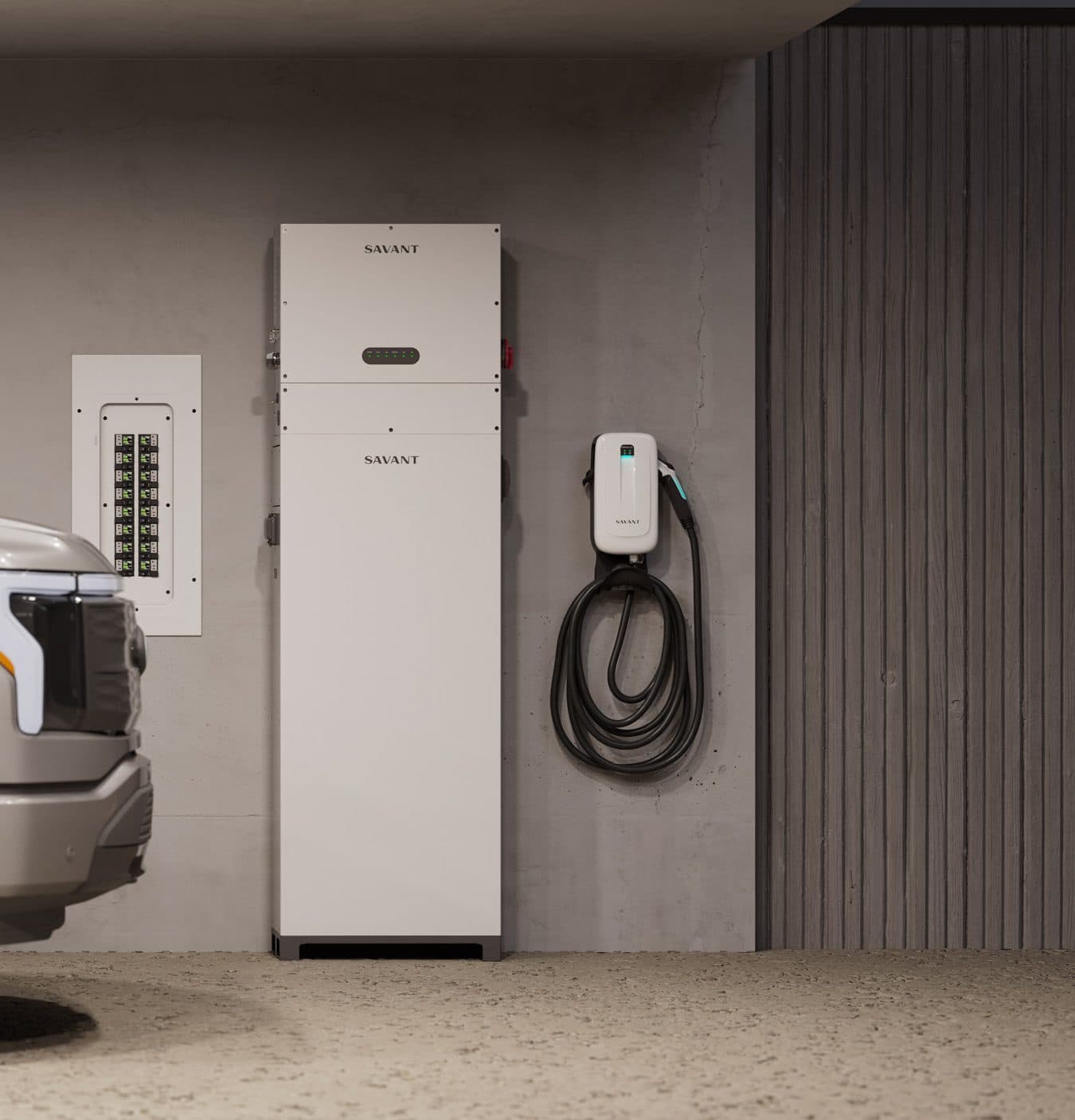
Savant Power is a battery plus control of each circuit. Modules in the panel know what every managed circuit draws, and energy scenes decide what stays on. When the grid goes down, Savant says the Essentials scene can run on its own, so the battery carries the furnace, the refrigerator and the network and leaves the pool heater off.
Can you use both?
Yes, and it is a common way in for owners who already have a Powerwall. Savant's compatibility guide lists Powerwall 2, Powerwall+ and Powerwall 3 with Backup Gateway 2 or the Backup Switch, and recommends a grid-state auxiliary contact and a local network connection to the gateway. The Powerwall keeps doing what it does, and Savant adds circuit monitoring, load shedding and scenes on top. We coordinate with your battery installer for that work.
Savant also lists FranklinWH aPower X and several Enphase IQ batteries. The idea is the same: keep the battery and add control.
Which should you choose?
Starting from nothing in a larger home, Savant Power Storage gives more storage per unit and one app for battery, circuits and EV charging. If the house has a Powerwall already, add Savant modules. If the house needs every circuit conditioned with no gap at all, read Savant Power vs RoseWater Energy.