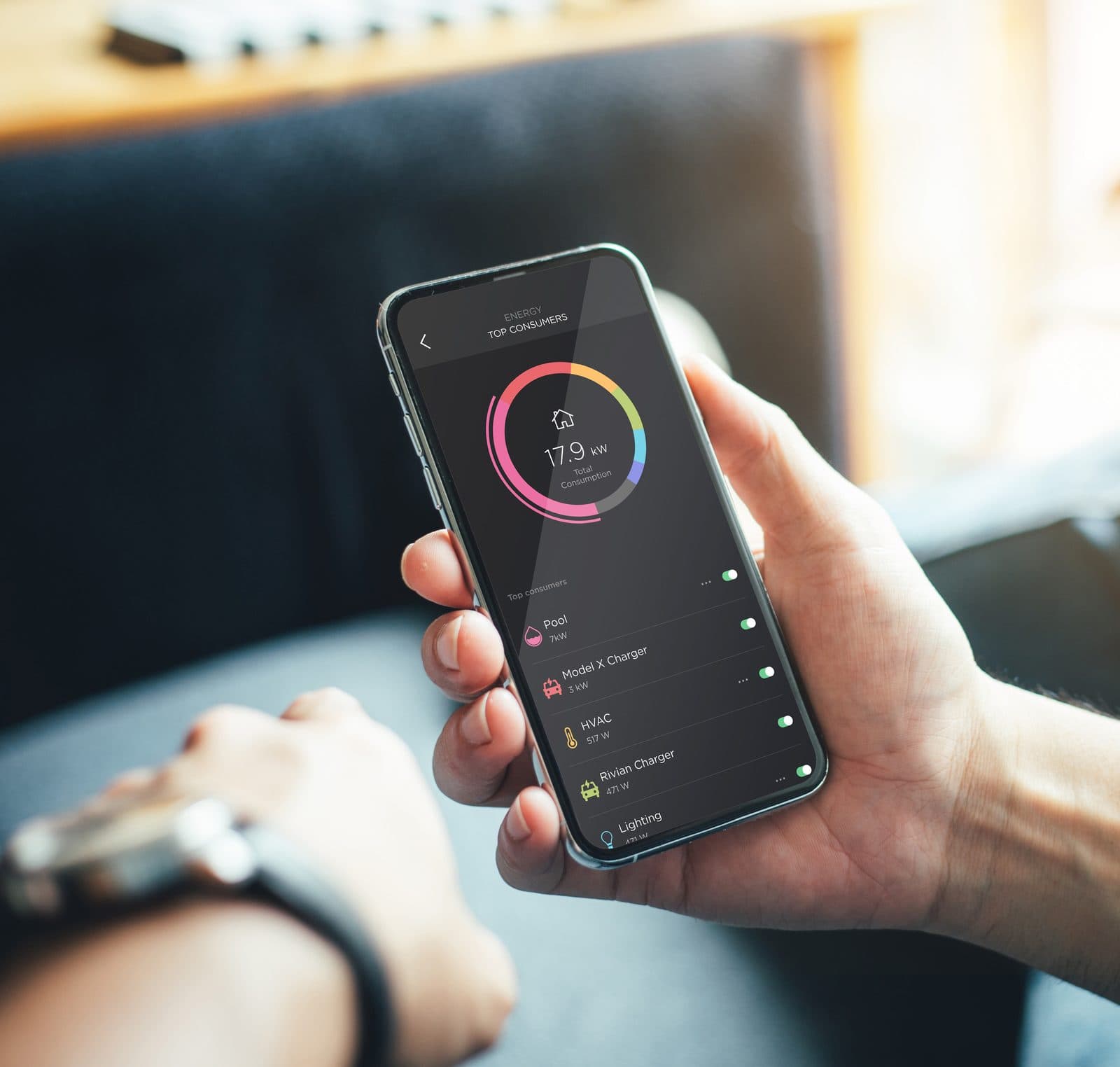
What kinds of home energy monitoring are there?
| Type | What it measures | Can it switch loads? |
|---|---|---|
| Utility smart meter | The whole house, as billed | No |
| Clamp-on whole home monitor | The whole house, with appliance estimates | No |
| Smart panel (such as SPAN) | Every circuit in the new panel | Yes |
| Savant Power Modules | Each circuit with a module, in the existing panel | Yes |
What do people learn from it?
Seeing each circuit on its own makes the quiet energy users easy to spot, such as a dehumidifier that never stops, a well pump that cycles too often, a heated driveway left on or an old second refrigerator in the garage.
It also helps with planning. If you are thinking about an EV charger or heat pumps, a few months of circuit data shows your real peaks, which is far better input for a load calculation conversation with your electrician than a guess. Read how to avoid a service upgrade for why that matters.
Why does control matter?
Data alone tells you what happened. Control lets the house act on it. With Savant you can switch circuits from the app, put them on schedules and build energy scenes. Savant gives the example of an Essentials scene that runs automatically when the grid goes down, and a laundry scene that limits power in entertainment spaces while the dryer runs. Savant also says the system can offset peak utility rates.
How do you get started?
Start with the big loads: heating and cooling, the EV charger, the water heater, the dryer, pool and spa equipment. A licensed electrician installs a module on each one. Savant says modules can be named and paired by the electrician before the home network is even in place. We set up the app with you and add circuits later if you want a fuller picture.